I haven’t had time to do any printmaking since early in term 1 as making the paintings for my exhibition took up all of my time. I went to the print making space for the first time in a couple of months this week and was pleasantly surprised by what I found.
I had started by making linocuts using imagery that I had generated using Midjourney. I had been writing prompts asking for images of data centres but then giving the AI unhelpful visual prompts like screwed up bits of sugar paper and abstract collages. I was interested to find out how far I could push the AI before the process would break down. I rather liked some of the outputs and thought that it could be quite interesting to then use these algorithmically generated sources in one of the most error-strewn, unpredictable and embodied printmaking processes.
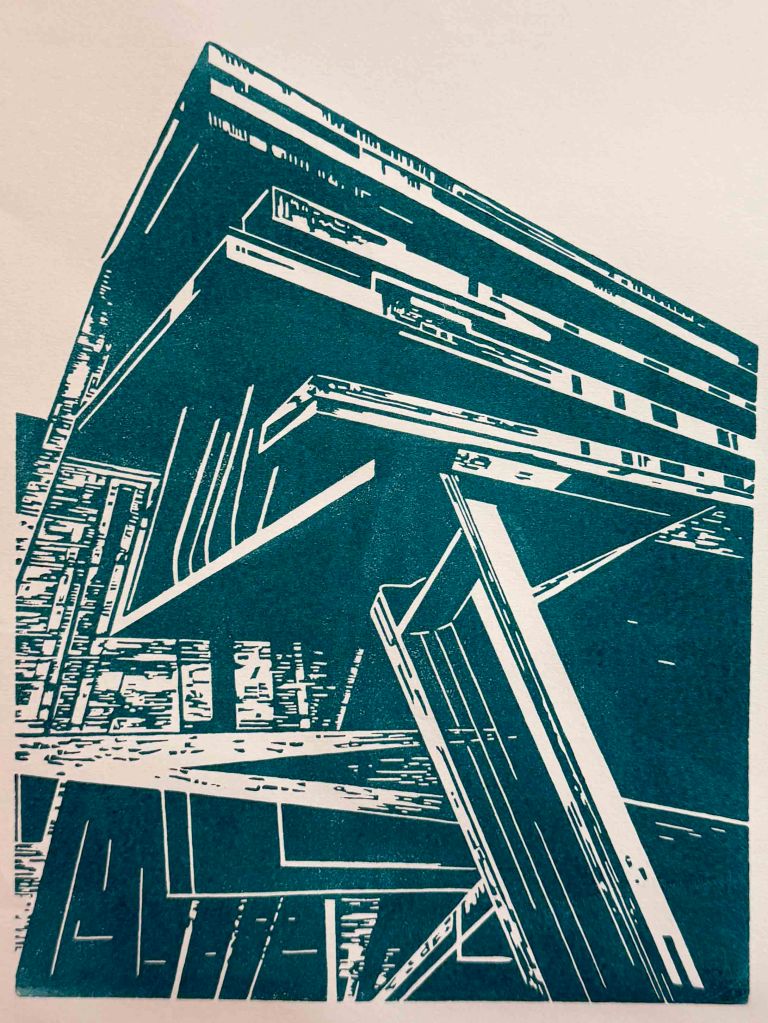
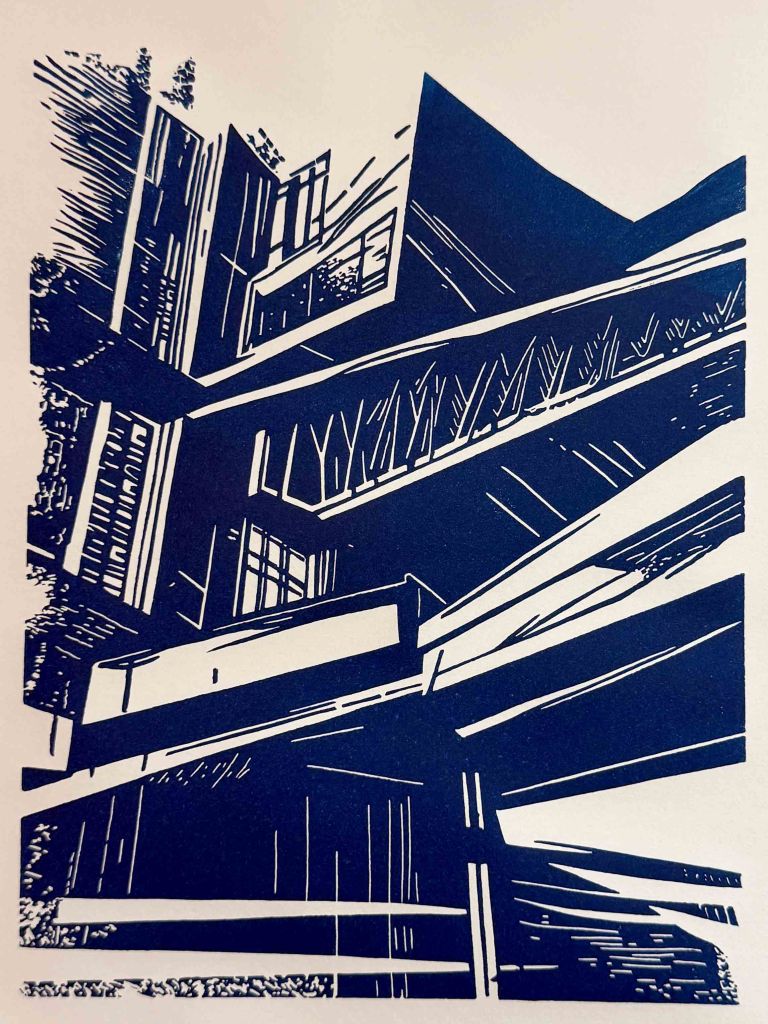
I thought that these initial prints were ok. They feel hand-made and I think that they are quite interesting, but I wondered what else I could do.
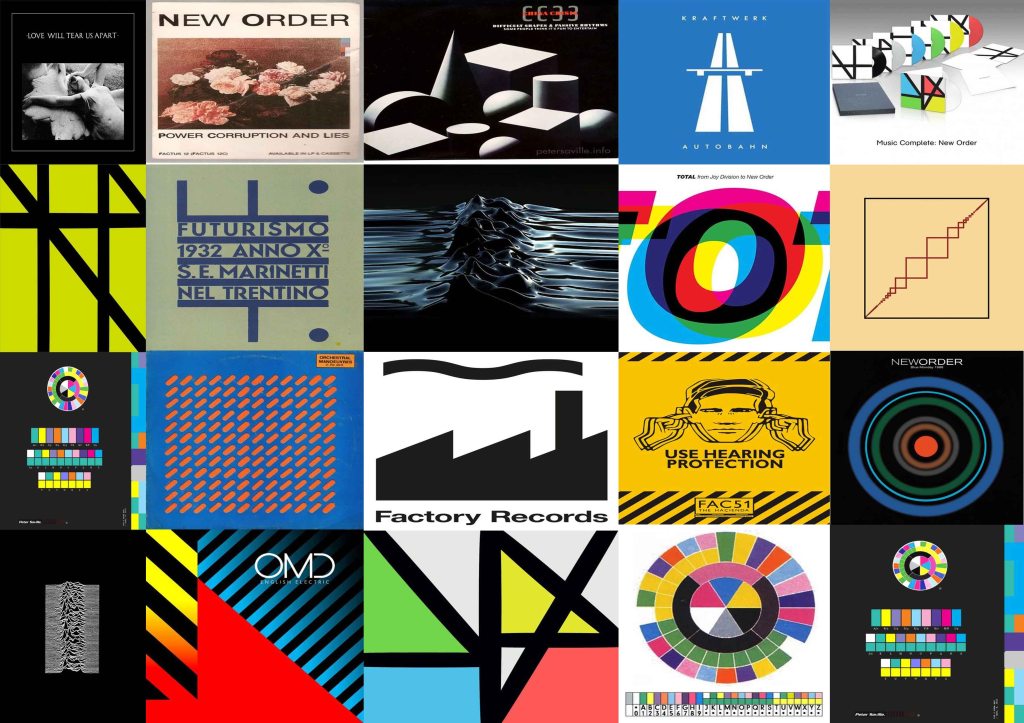
I had read an interview with Grayson Perry in which he said that he believes that ‘artists’ are not threatened by generative AI but that graphic-designers and greetings card illustrators are. I am always fascinated by the way that boundaries get drawn in the world and have a particular interest in where the lines are deemed to be between things like art, craft, illustration, and design. As an eighties teenager I have a big soft-spot for the visual language of designers like Peter Saville:
I wondered how easy it might be to generate some sort of graphic visual language using AI. I decided not to ask for something ‘in the style of’ as even though my research was reasonably embryonic at this stage, I was already thinking hard about the ethical aspects of what I was doing. As it turned out, it was pretty easy to do and my first prompt ‘geometric shapes that resemble Japanese script’ produced an abundance of interesting results.
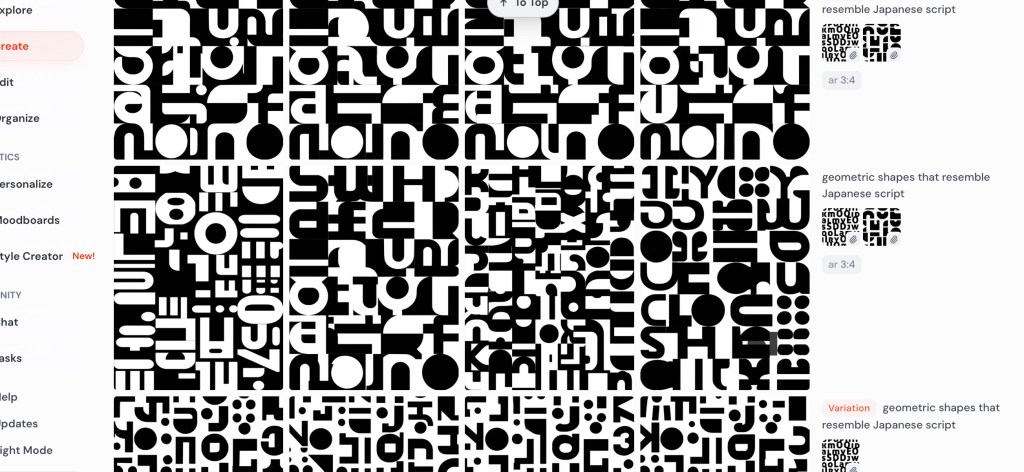
I took a few of these outputs and cut them in lino. I took a few prints from them:
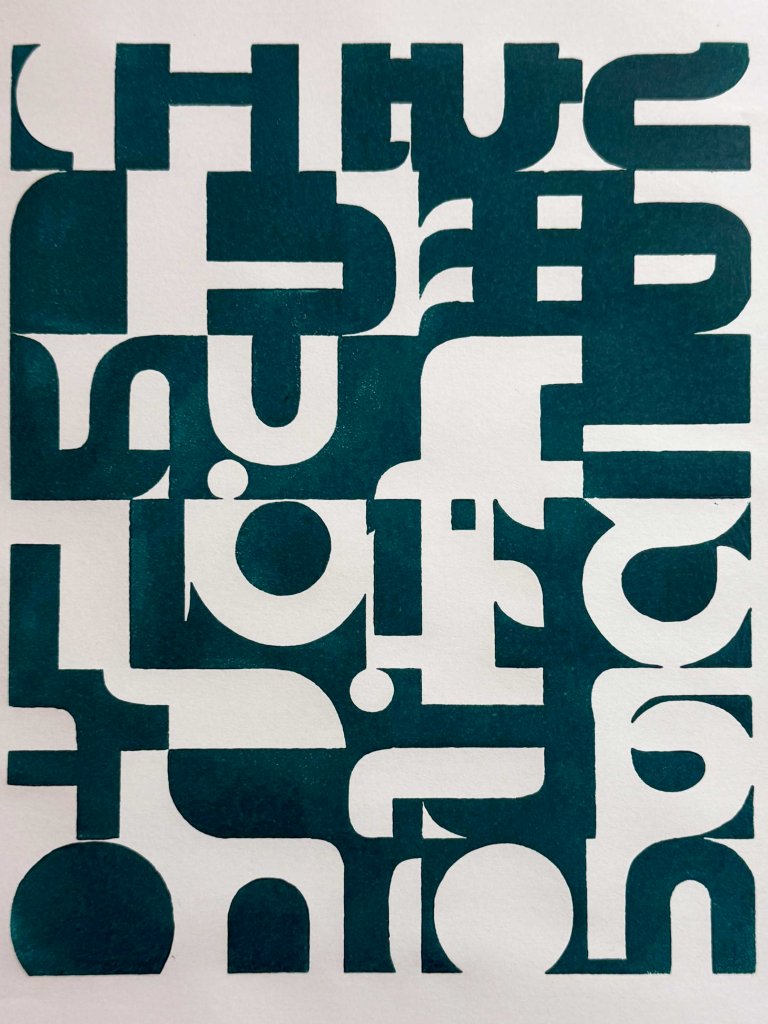

As prints they were ok, but not particularly satisfying, although when I began to mix and match them the results were better:
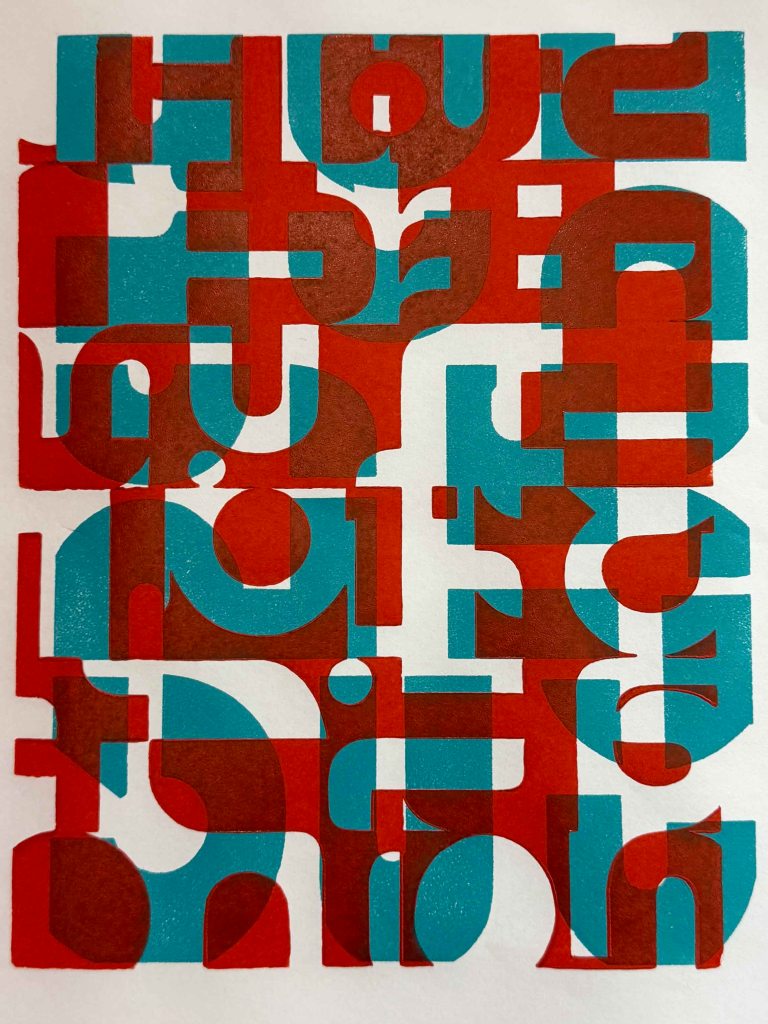
I particularly like how handmade this proof looks. The rolling of the ink is uneven, the registration is rough, the handcut nature of the shapes is visible.
In the spirit of experimentation I decided to combine the two series of blocks:
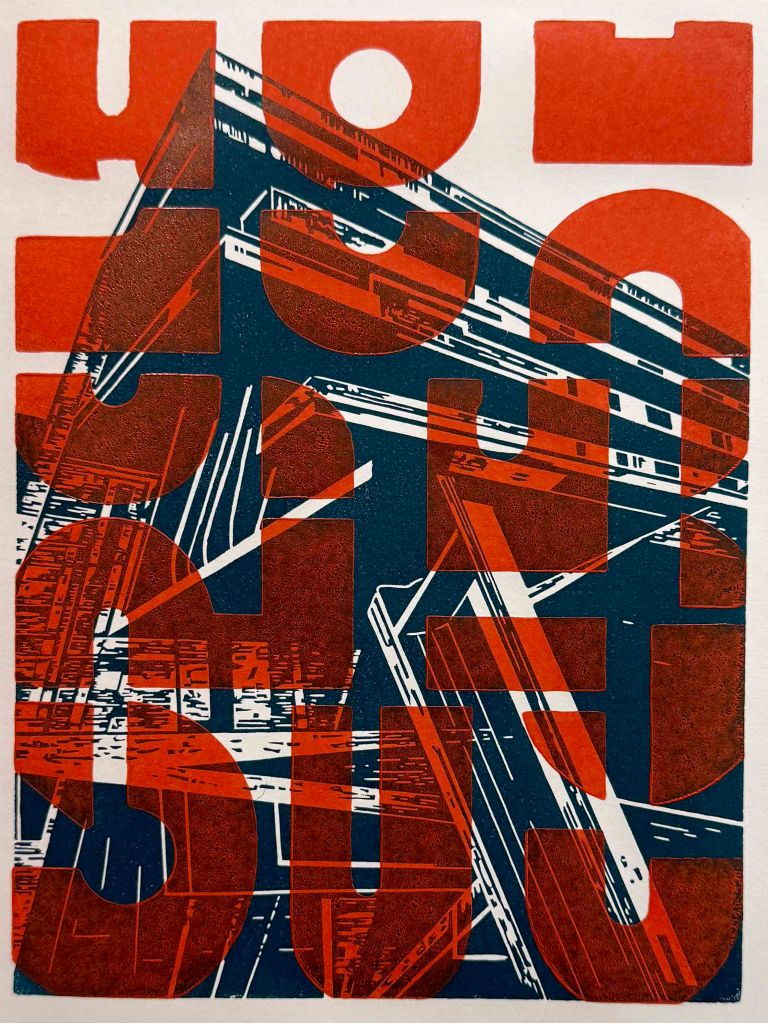
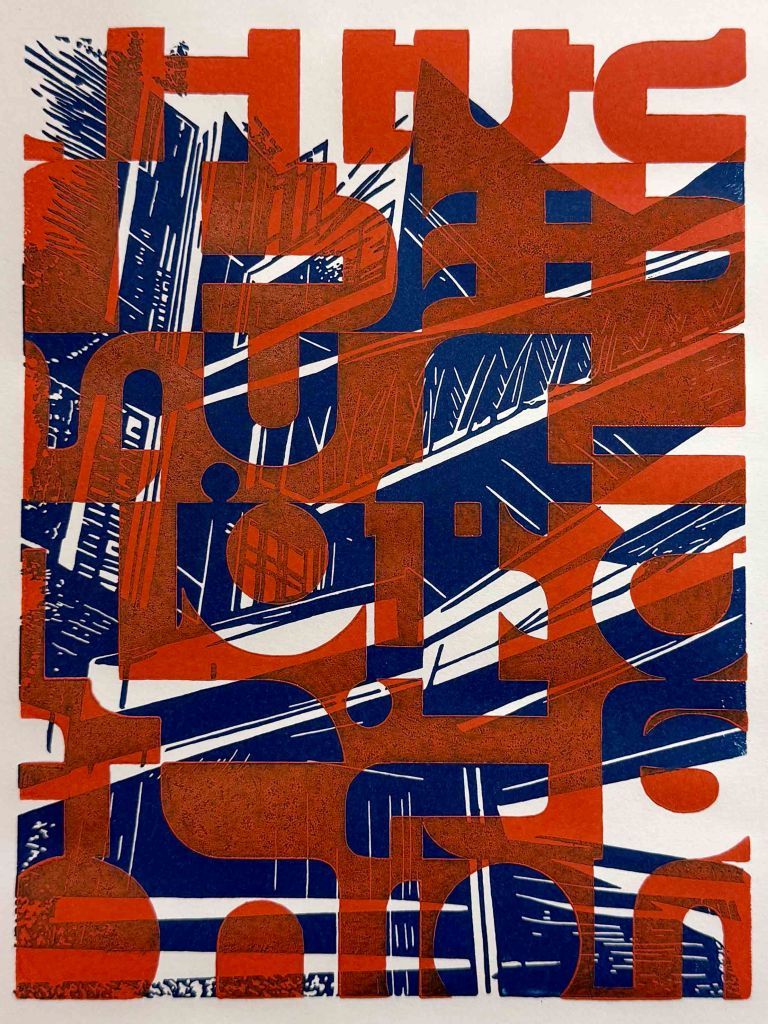
I don’t have access to press at the moment so all of these prints are hand-pulled using a ball-bearing baren. This makes it quite hard to get an even layer when extender is added to the ink. At the time I was finding this quite frustrating and spent a lot of time experimenting with different quantities of extender:
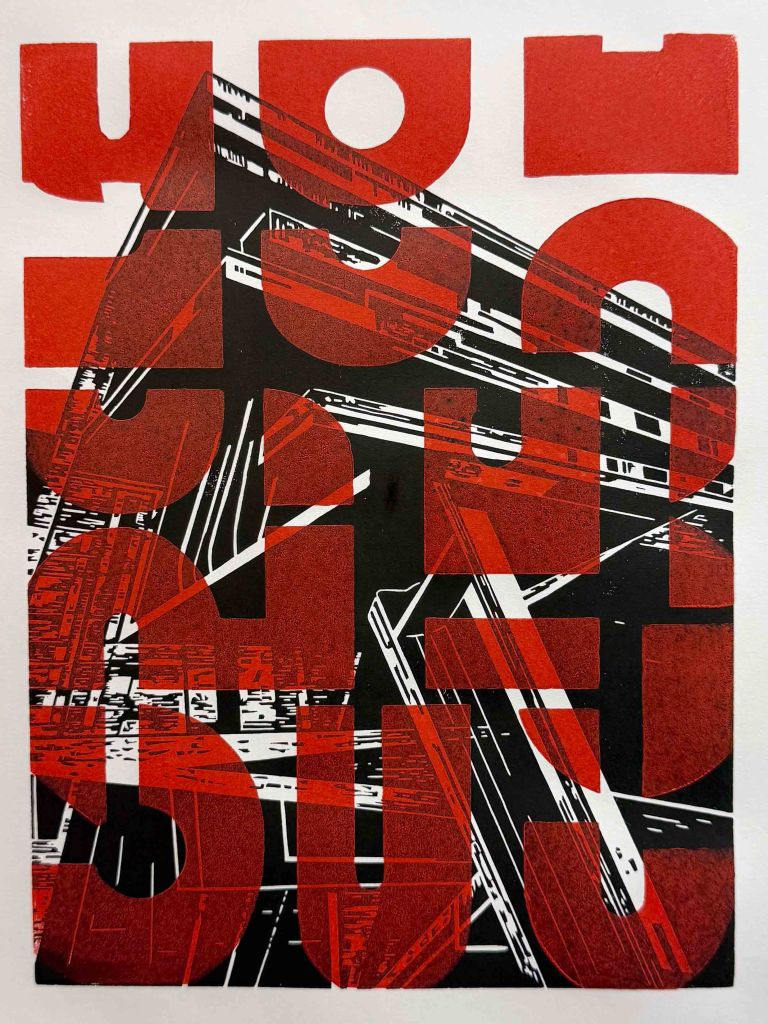
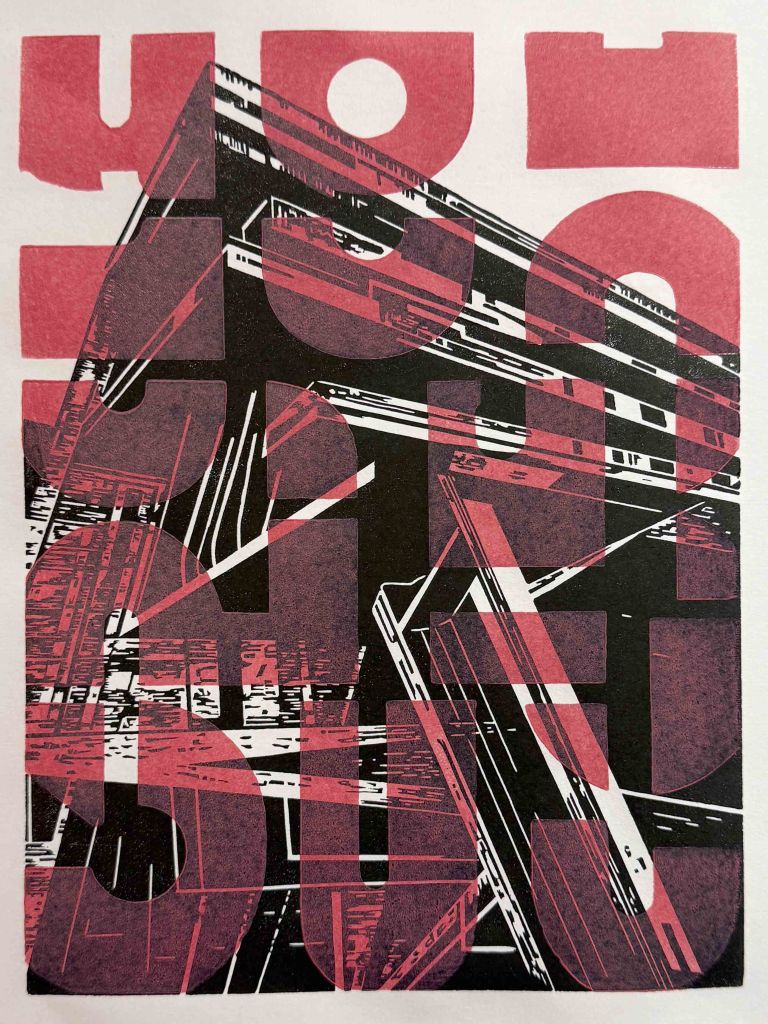
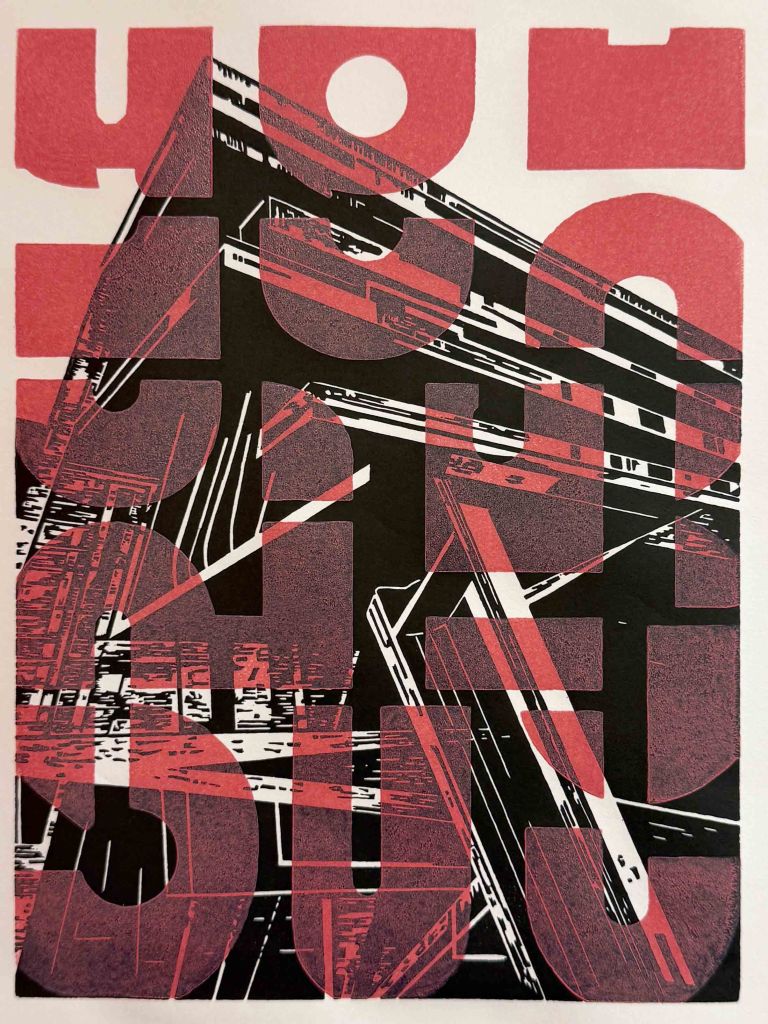
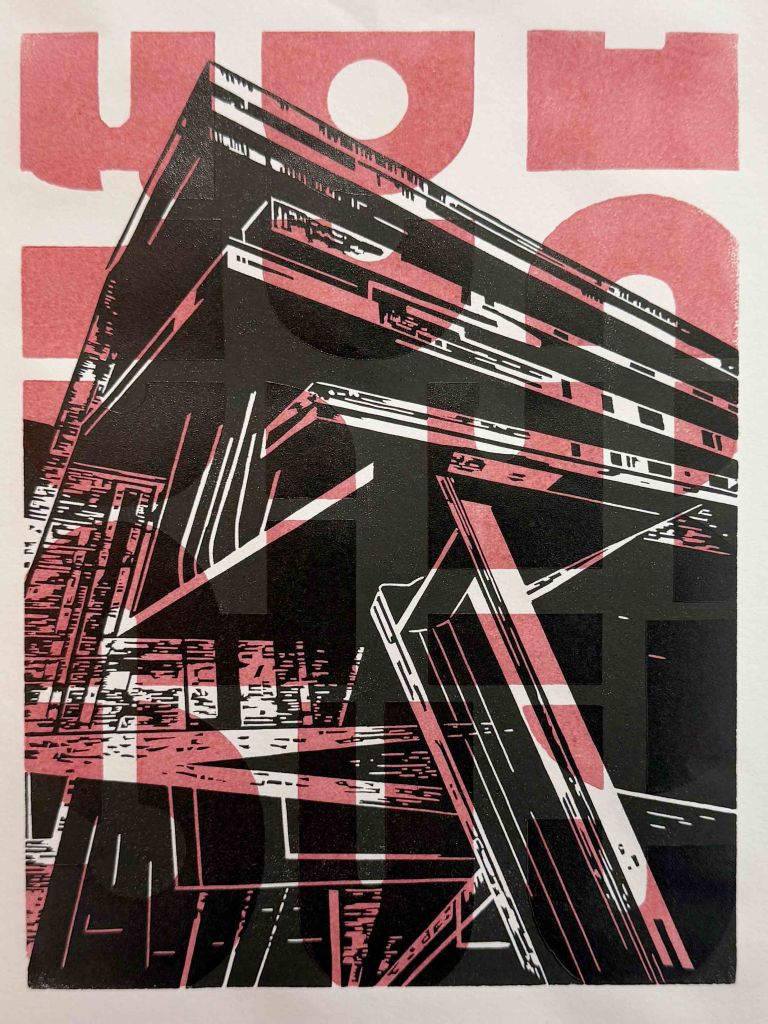
As I was testing ideas I shoved proofs up on the studio wall:
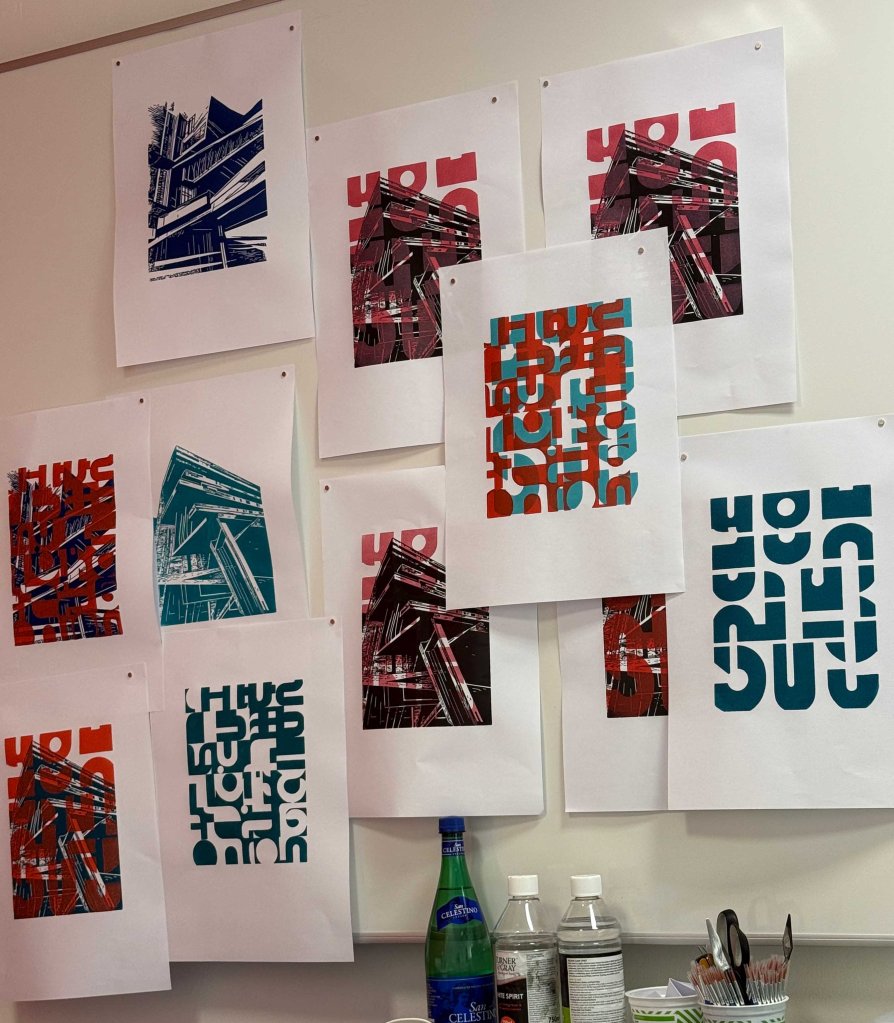
Walking back into the studio this week I was struck by a number of things. When I was making these prints I hadn’t even started writing my Study Statement but it’s interesting how much of the thinking that I was doing in this making has made its way into my final project. I am a big believer in the idea of thinking through making. I think that it is important that this is a mindful process as it can be easy to sometimes ‘get lost in the making,’ as one of my undergraduate tutors put it to me. I was also struck by this random arrangements of prints on the wall. This could be a good way of presenting the work to make a point of the iterative process. I even wondered if this might be a better thing to show in the interim exhibition. I will give this some thought (I could always take the prints along as well and then show them if there’s space).
 Ben Lingard
Leave a comment